

Hapū-led biosecurity response framework sets new standard for community action
16 Feb 2026, 1:05 PM
After tonnes of the invasive seaweed exotic caulerpa washed up on Bay of Islands beaches last year, one call on the ‘kumara vine’ was all it took for Te Taitokerau hapū to spring into action, with hundreds mobilising to help with the clean-up and prevent further spread.
That rapid response saw the birth of Te Tira Taiao o Te Taitokerau - a first-of-its-kind, hapū-led biosecurity response framework - marking a significant shift in how biosecurity risks are identified, communicated and responded to at a community level.
Te Ruarangi co-chair and Te Tira Taiao o Te Taitokerau lead Nyze Manuel says the framework draws on long-established hapū relationships, tikanga and local knowledge, first tested during Covid through the Te Taitokerau Border Control.
Manuel says Te Tira Taiao o Te Taitokerau is an extension of that mahi, bringing together hapū, Northland Regional Council (NRC) and the Ministry of Primary Industries (MPI) to respond quickly and effectively to emerging biosecurity threats.
"This network isn’t something new - it’s whakapapa, it’s whanaungatanga and it’s been stood up because of the condition of our taiao," Manuel says.
"It’s a model based on hapū concern. We’ve been working in what people might call ‘underground’, but really we were just doing what our tūpuna have always done ki mai rānō (forever) - noticing changes in our taiao and discussing our concerns collectively.
"What’s different now is that this way of working is being formally recognised and supported by councils and other agencies."
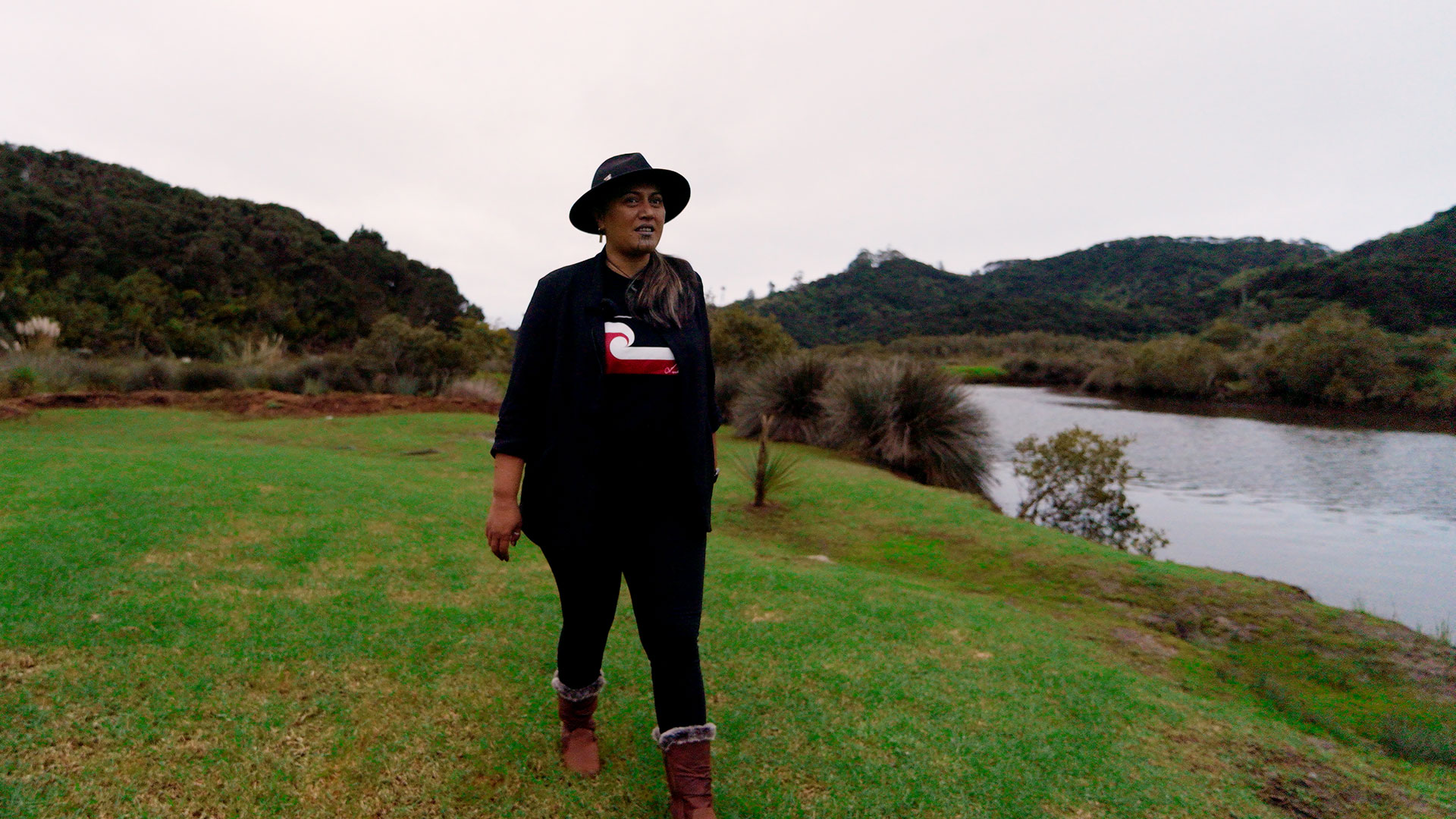
Te Ruarangi co-chair and Te Tira Taiao o Te Taitokerau lead Nyze Manuel says the hapū-led framework draws on longstanding relationships, tikanga and local knowledge to unite hapū, NRC and MPI for rapid, effective biosecurity responses.
Education as the first line of defence
A key focus of the framework, Manuel says, is normalising conversations about biosecurity risks so people know what to look for, why it matters and what to do if they find something.
Te Tira Taiao o Te Taitokerau is also unique in its approach as it prioritises prevention, education and mobilisation, led by people who know their environment and communities best.
When the exotic caulerpa response pilot launched last year, Manuel says many people didn’t know what it was, what signs to look for, or how to report it.
In response, the group has rolled out locally tailored signage (funded by MPI), hapū-led engagement and clear reporting pathways across high-use areas in Northland, including boat ramps, marinas and coastal access points.
"That was the gap - people just didn’t know what it was," Manuel says.
"Now our hapū are out there on the ground as kaitiaki, we’re normalising conversations around biosecurity, using caulerpa as our springboard.
"Each sign includes a local contact person, which then feeds into a centralised MPI database.
"People can’t report what they don’t understand, so education is our most powerful tool."
Working alongside NRC and MPI
While leadership sits with hapū, the framework works in partnership with regional and central government agencies, including NRC and MPI, to ensure information flows quickly and appropriate action can be taken.
NRC Deputy Chair Jack Craw, who chairs the council’s Biosecurity and Biodiversity Working Party, says the framework significantly strengthens early detection by increasing the number of trusted ‘eyes on the water’, particularly in remote coastal areas.
"It reflects the reality that locals are often the first to notice change," he says.
"People who’ve dived, fished or gathered kai in the same places their whole lives will notice something different straight away. That local knowledge has already been critical in identifying exotic caulerpa early in places like Aotea and the Bay of Islands."
The framework also recognises that biosecurity threats are not just environmental or economic, but impact cultural practices, identity, wellbeing and intergenerational relationships with the whenua and moana.
For hapū and iwi, protecting coastal environments is about safeguarding whakapapa and ensuring future generations can continue practices such as gathering kai, fishing and caring for wāhi tapū.
Looking ahead
Manuel says while the framework offers lessons for other regions, it is not a one-size-fits-all model, with success dependent on long-term relationships, shared accountability and deep community connection.
Instead, it demonstrates what is possible when hapū leadership is resourced, respected and partnered with.
"People have tried to replicate the model and failed because they don’t have the relationships or trust of those leading the kaupapa," Manuel says.
"This kaupapa holds the tikanga of old, whereby back in the day, each hapū or whānau held different portfolios- whether on the moana, whakapapa or elsewhere.
"We do the same today because there’s no ‘I’ in this mahi. We can’t do everything on our own and will always need each other."
With biosecurity risks expected to increase, the framework provides a strong foundation for responses to both current and emerging threats.
By centring hapū leadership, collective action and preventative education, it positions communities as active protectors of their environments, working alongside councils and agencies.
The framework is supported through MPI funding, with NRC focused on enabling and resourcing community-led action.
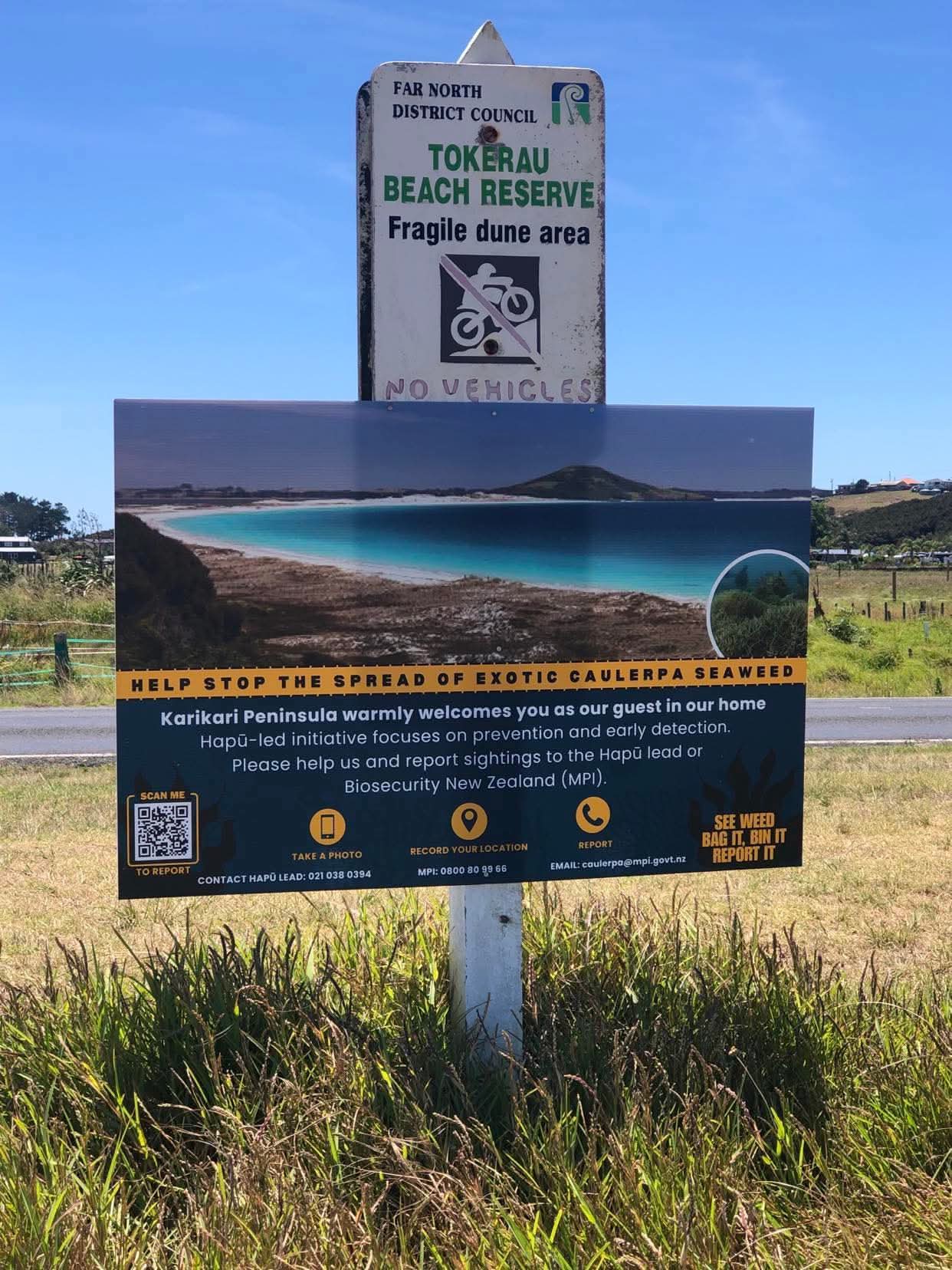
Te Tira Taiao o Te Taitokerau has rolled out locally tailored signage across high-use areas in Northland, including boat ramps, marinas and coastal access points.