

Iconic Kai Iwi Lakes protected from wild deer
15 Dec 2025, 2:26 PM
Kai Iwi Lakes and its surrounding areas have officially been declared wild deer free – bringing us one step closer to achieving a wild deer free Northland.
Northland Regional Council’s Kaipara General ward councillor John Blackwell says following the illegal release of approximately 30 known fallow deer in 2014, the last known sighting of a wild deer in the area (subsequently caught) was in 2019.
“To claim eradication means that we’ve had to survey an almost 20,000 hectare Kai Iwi Lakes project area with a fine-tooth comb, no mean feat given it stretches the coastline from Aranga Beach to north of Baylys Beach, with an inland boundary at State Highway 12.”
Councillor Blackwell says cutting edge tools and proven methodologies had enabled the search to be done efficiently.
“Thermal drones, deer and scat (faeces) indicator dogs, trail cameras, and public sightings have all come back with ‘zero’ wild deer, which is fantastic.”
He says despite the size of the area, the council can now confirm with some confidence that no wild deer are present.
“This work is important because even a few deer means that the population can quickly bounce back, undoing years of conservation gains in our forests and wetlands.”
“This would be far worse and costlier to fix later – this one-off investment helps us secure long-term ecological health.”
Councillor Blackwell says the project will now move into a low-impact monitoring phase and rely on public reporting to ensure the Kai Iwi Lakes area – a national treasure – remains wild deer free.
“Deer are selective browsers that graze on native vegetation, disrupting ecosystems and leading to poor regeneration of the forests.” “Their over browsing and trampling can also lead to soil erosion —something we cannot allow in this iconic area.”
He says as part of this project, additional ungulate (hoofed mammal) control was also carried out around the lakes, working with Kaipara District Council, surrounding landowners, and Te Roroa, all of whom share a strong commitment to protecting this special place.
“With the approval from the landowners, 25 feral goats and several feral pigs were removed from just a small area surrounding the lakes.”
“This is a win for the ecosystem, especially as we continue working to safeguard Kai Iwi lakes from other threats, such as keeping freshwater invasive clams out of these lakes.”
Councillor Blackwell says the wild deer free Kai Iwi Lakes project is part of the regional Wild Deer Free Northland programme, a joint initiative between the Northland Regional Council and the Department of Conservation.
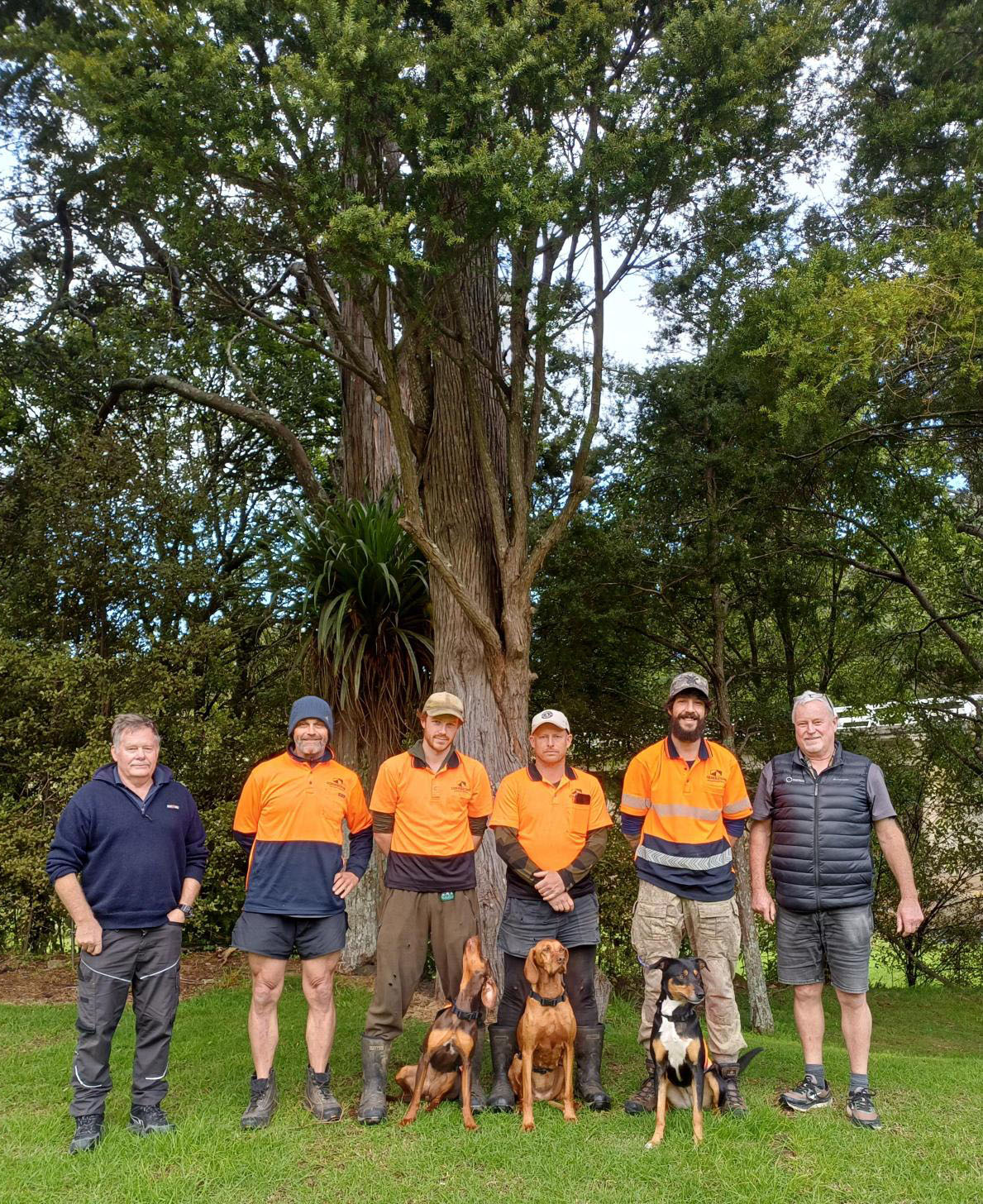 Northland Regional Council Biosecurity Officer Trevor Bullock, left, and council Deer Project Lead Grant MacPherson, far right, with specialised wild animal eradication contractors from Cornerstone Conservation, who carried out the work to confirm no deer were present.
The programme has gained a lot of support and widespread attention from the public and local hapū for its sika eradication project in the Russell Forest, which has now had 65 deer removed.
Any recoverable meat has been given to landowners or the local hapū. Positive feedback has been received by locals who have already noticed some regeneration of the forest.
“With the low, isolated wild deer populations, public support, new technologies, and cooperation from deer farmers, a wild deer free Northland is within reach.”
Councillor Blackwell says Northland is fortunate to have the opportunity to safeguard its environment from out-of-control wild deer populations.
“As we’ve seen in some other regions, wild deer can also cause a lot of damage to our farming communities and native ecosystems, something we’re determined to prevent here”.
“Moreover, this programme helps maintain Northland’s TB (tuberculosis) free status, which greatly benefits the regional economy, as illegally released deer may have been sourced from TB infected areas.”
He says until the late 1980s, Northland was one of the few wild deer free regions in New Zealand and all populations here are either from illegal releases or deer farm escapes.
“Returning to a wild deer free region and defending this exclusion zone supports the bigger national picture for managing wild deer, as set out in DOC’s Te Ara Ki Mua document.”
Councillor Blackwell says the next focus area will be the Pouto peninsula, working together with local hapū/iwi and landowners.
“We would like to thank all those that have been reporting deer sightings around Northland.”
“If landowners do happen to shoot deer in Northland, please let us know, as we’d like DNA samples from its ear clipping.” “We also recommend photos or videos to be supplied as supporting evidence.”
More information about the Wild Deer Free Northland programme is available at: www.nrc.govt.nz/wilddeer
If you see or hear wild deer, report it on 0800 FIND DEER (0800 346 333) or email the team on wilddeerteam@nrc.govt.nz
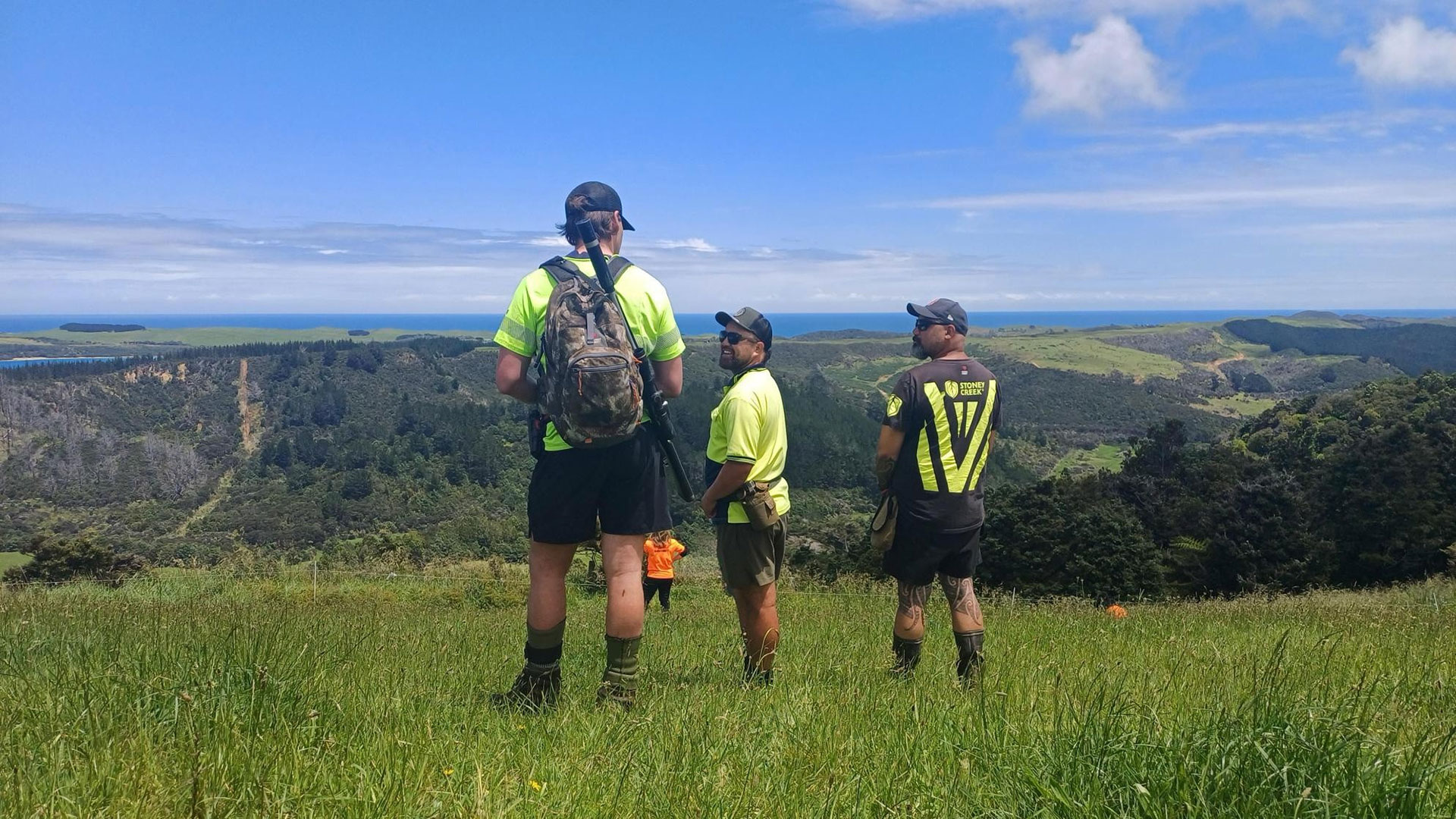
Contractors from Te Roroa and Bushcraft Contracting carrying out additional ungulate control in a small area around the protected Kai Iwi lakes.