

BREAKING NEWS


In December, 29 Te Taitokerau educators met at Cornerstone in Kerikeri for Te ao hurihuri, a workshop equipping them with age‑appropriate, hopeful ways to teach climate change and adaptation.
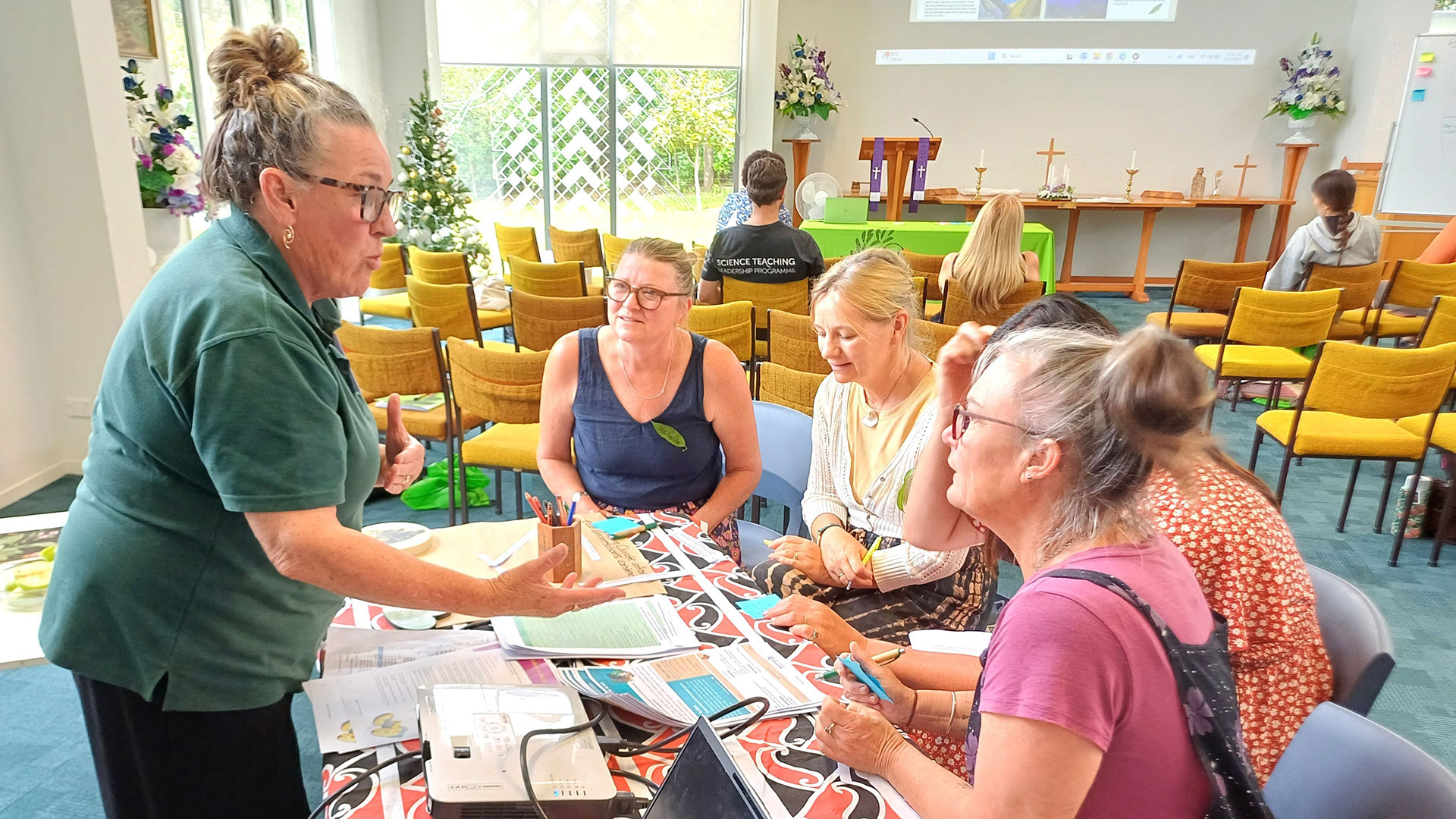
Judy Crooks, Enviroschools Facilitator – Early Childhood, works with kaiako to explore simple, hands‑on activities that support climate learning in the early years.
The workshop was a collaborative effort, organised by Northland Regional Council’s Education team alongside the Climate Action and Te Tiriti Partnerships teams.
Early childhood learning was a key focus. For Early Childhood Education kaiako, the kōrero was about practical ideas they could use straight away with tamariki.
Enviroschools Facilitator – Early Childhood, Judy Crooks focused on showing passionate ECE kaiako how climate learning in the early years can be playful and accessible with low-cost hands-on experiments using everyday items such as apples, water, ice and vinegar to explore big ideas.
The approach reflected the wider kaupapa of the hui, supporting early understanding and helping tamariki develop a sense of care for te taiao from a young age.
As well as representatives from early childhood centres, it brought together kaiako from primary and secondary schools and organisations such as EcoSolutions, Creative Northland, Mountains to Sea and Garden to Table.
As a collective, the educators represent a potential reach of 4,786 tamariki and rangatahi across the rohe.
NRC’s Regional Climate Adaptation Programme Lead, Rakesh Pinao, a former meteorologist, ran a session with an introduction to climate science – what climate is, how change happens and what it means for Te Taitokerau.
Using biodiversity as an example, he explored how species like kōkako, bittern and dotterel depend on environments that are vulnerable to climate impacts.
He also had a clear message for the educators – teaching our young people is one of the most powerful ways we can make a difference.
Participants also experienced the awe-inspiring videography of Blake NZ-VR, an educational outreach programme inspired by Sir Peter Blake’s environmental legacy.
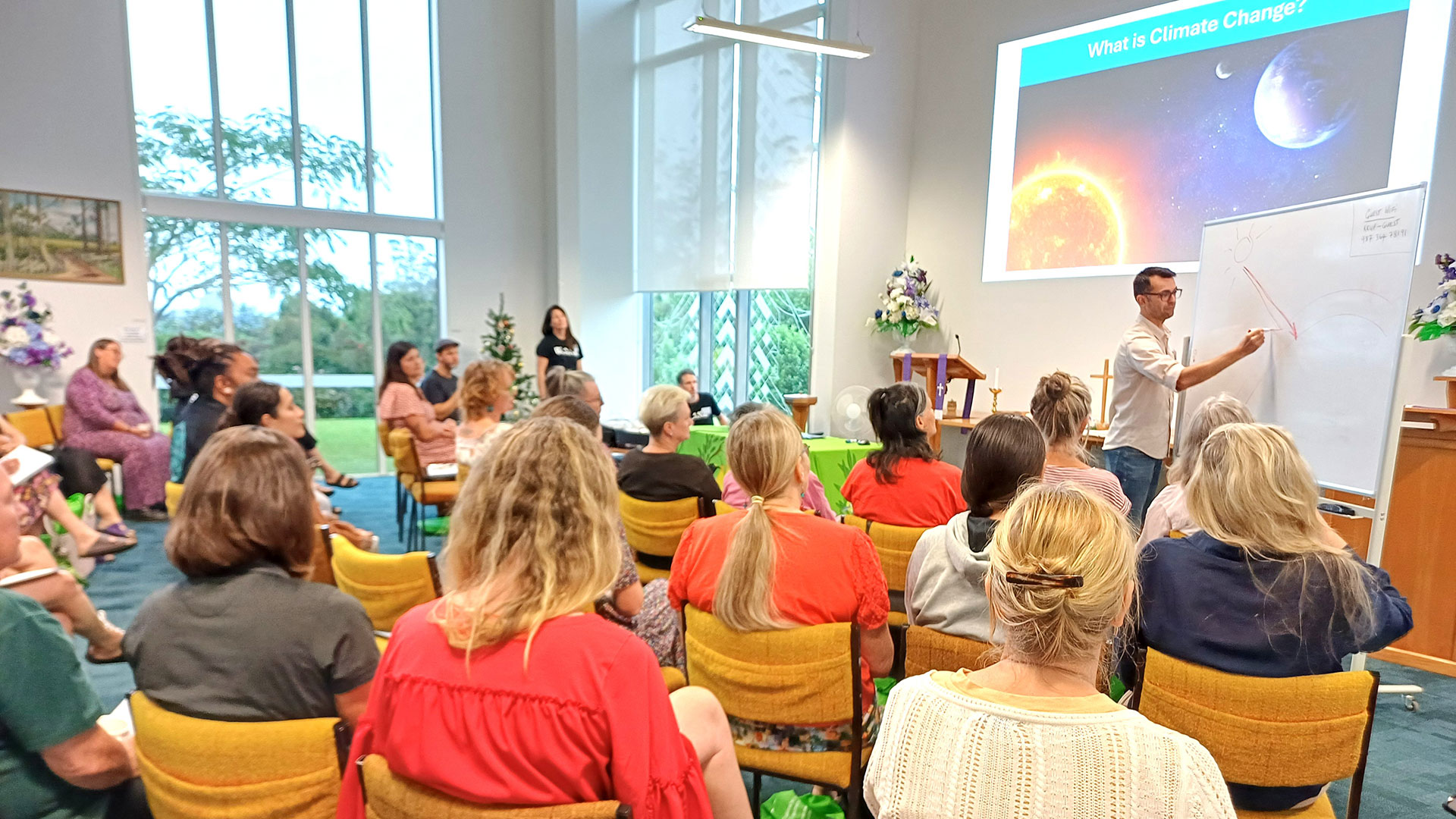
Former meteorologist and NRC Regional Climate Adaptation Programme Lead, Rakesh Pinao, presents on climate change at the Te ao hurihuri workshop.
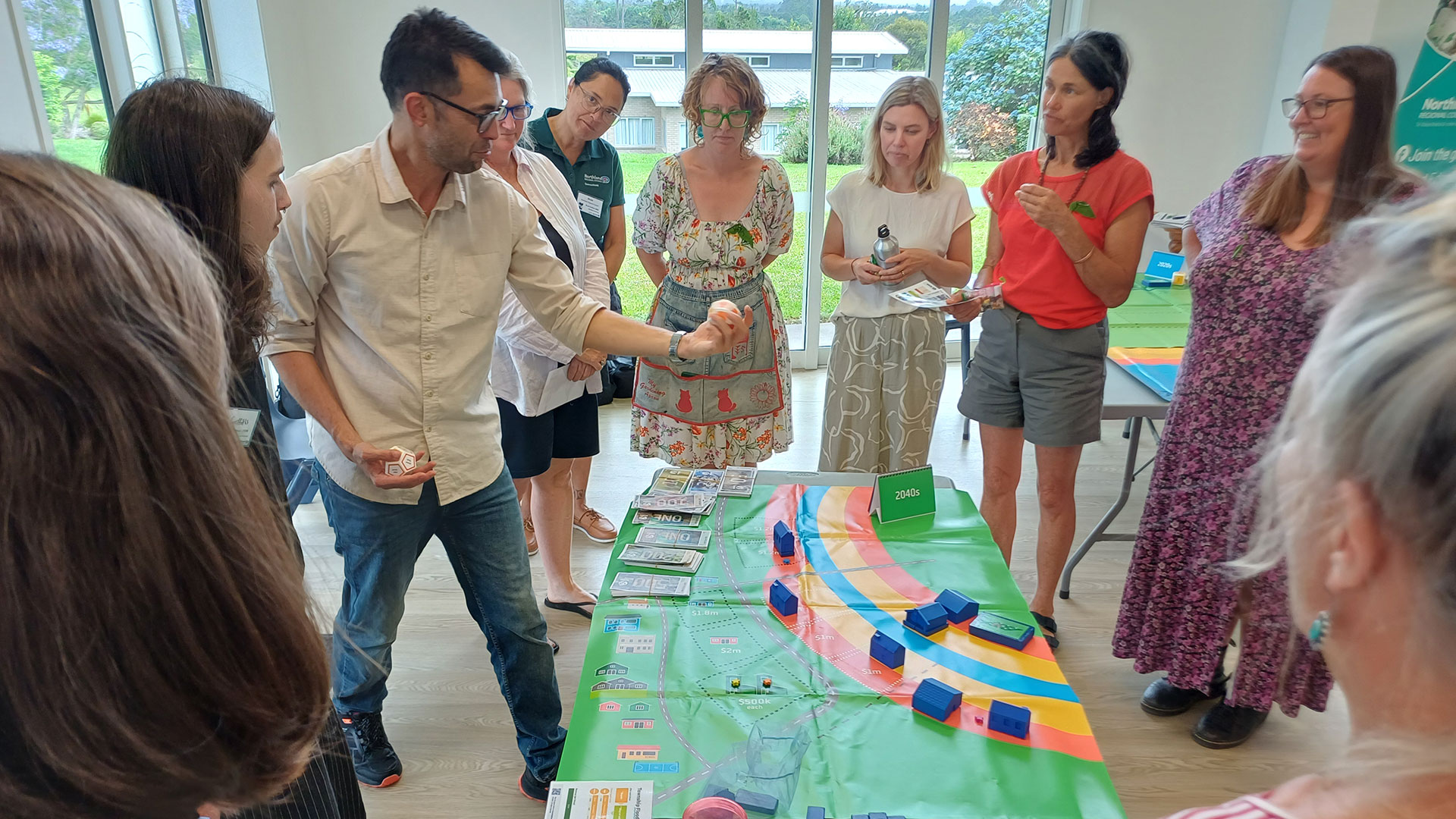
Educators engage in a Serious Games activity during Te ao hurihuri, guided by NRC’s Regional Climate Adaptation Programme Lead, Rakesh Pinao.
Through virtual reality headsets, teachers explored the health of the moana (ocean), the impacts of climate change and solutions such as clean energy and sustainable agriculture.
“It was wonderful having a chance to see through the [VR] goggles,” said Jo Shanks from EcoSolutions. “The more people who get that connection with nature the better.”
Educators had the chance to rotate through other interactive workshops including – mātauranga Māori (Māori knowledge), the Climate Change Learning Programme, Climate Club’s Ripple workshop and Earth Science’s (formerly known as NIWA) Serious Games.
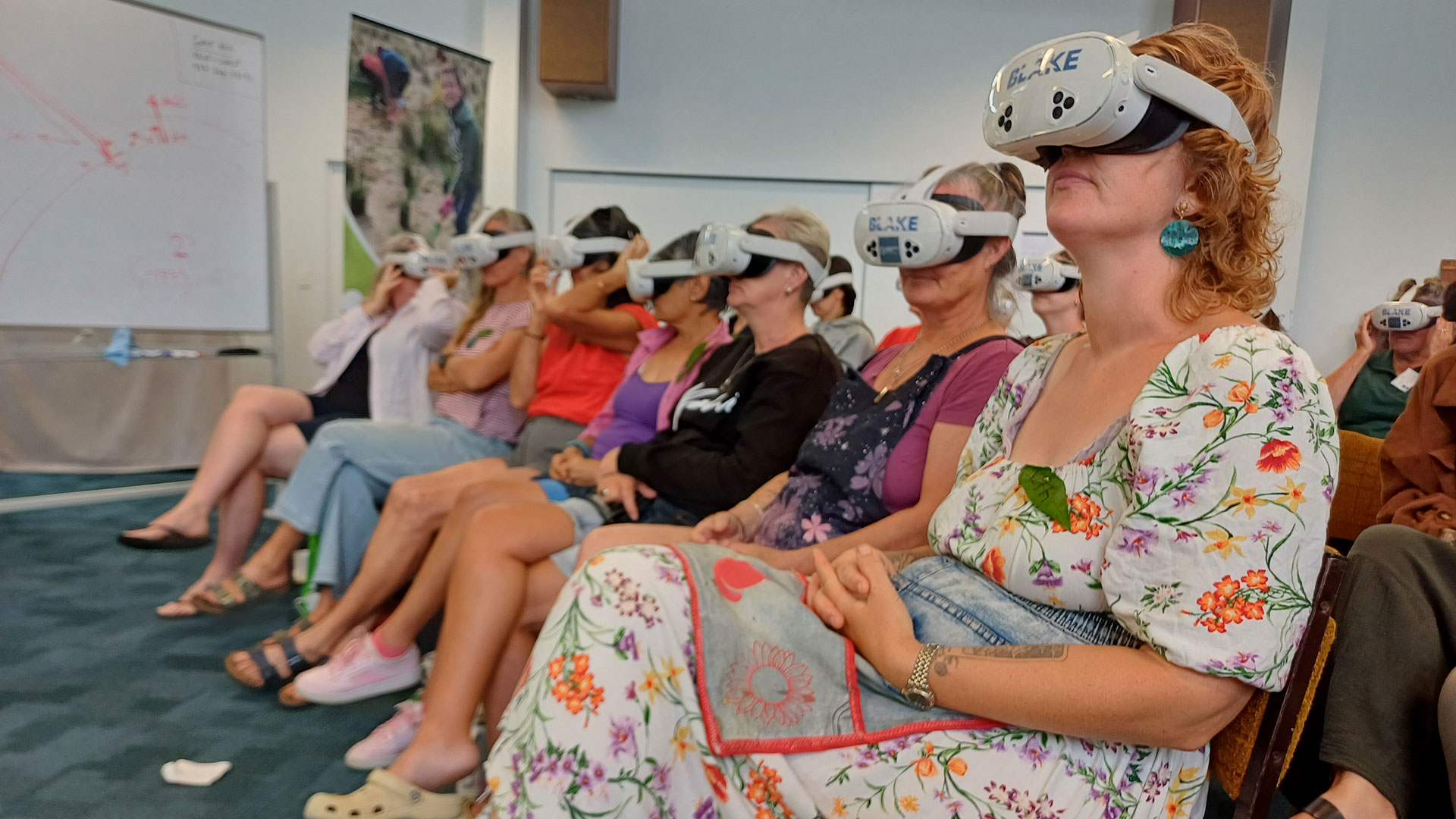
Kaiako experience an immersive virtual reality session at Te ao hurihuri, exploring climate change, the health of the moana and practical solutions during the Kerikeri workshop.
The activities sparked kōrero about practical steps on how to engage their students.
“There’s room at the table for mātauranga and science to have equal opportunity to enhance, develop and make good impacts on the environment,” NRC’s Senior Kaiārahi Tikanga Māori, Robert Nathan said.
By the end of the day, participants left inspired and equipped with ideas they could implement straight away and connections to keep building on.
“We’re coming away with ideas that are practical; things we can put in our long-term plan,” said JoAnne Morningstar, Deputy Principal of Riverview School.
For many, the hui reinforced the importance of knowing the ‘why’ behind climate action and weaving it into everyday learning.
As NRC’s Education Manager, Susan Karels summed up: “Our hui today is built on the Enviroschools kaupapa. We’ve been able to draw on resources, work with experts, and have a lot of fun.”
Te ao hurihuri showed what is possible when educators come together with a shared vision: empowering young people to care for te taiao and lead the way toward a sustainable future.
