
BREAKING NEWS


Weed control might not be the first thing that you think of when you plan dune restoration work, but it probably should be!
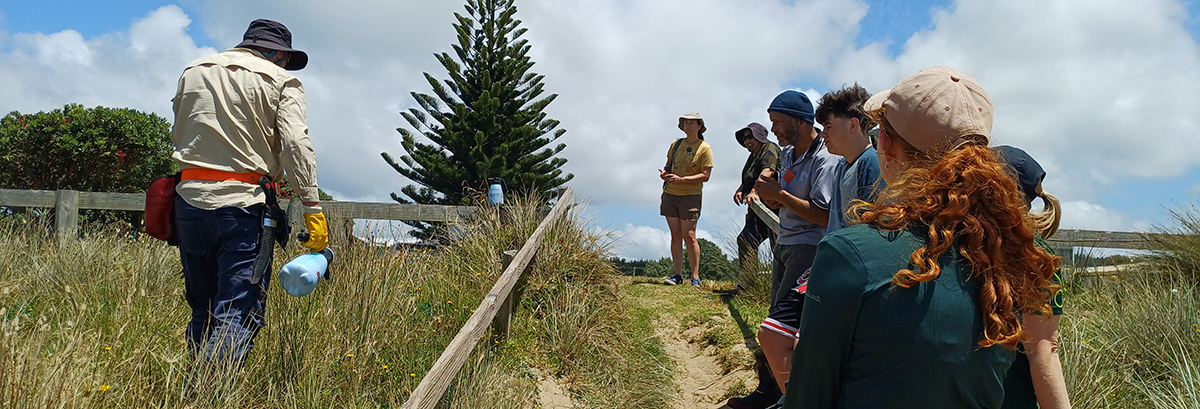
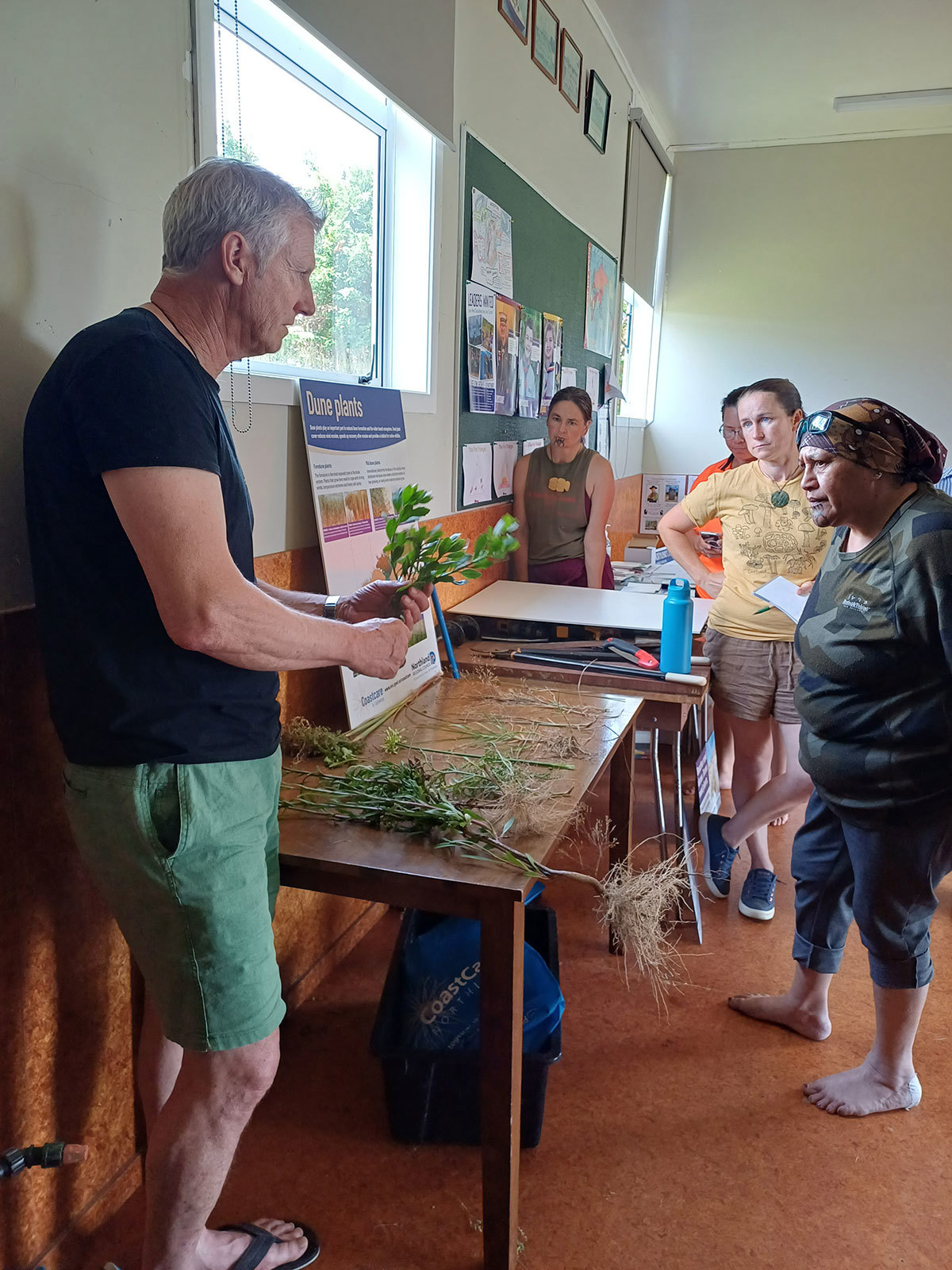
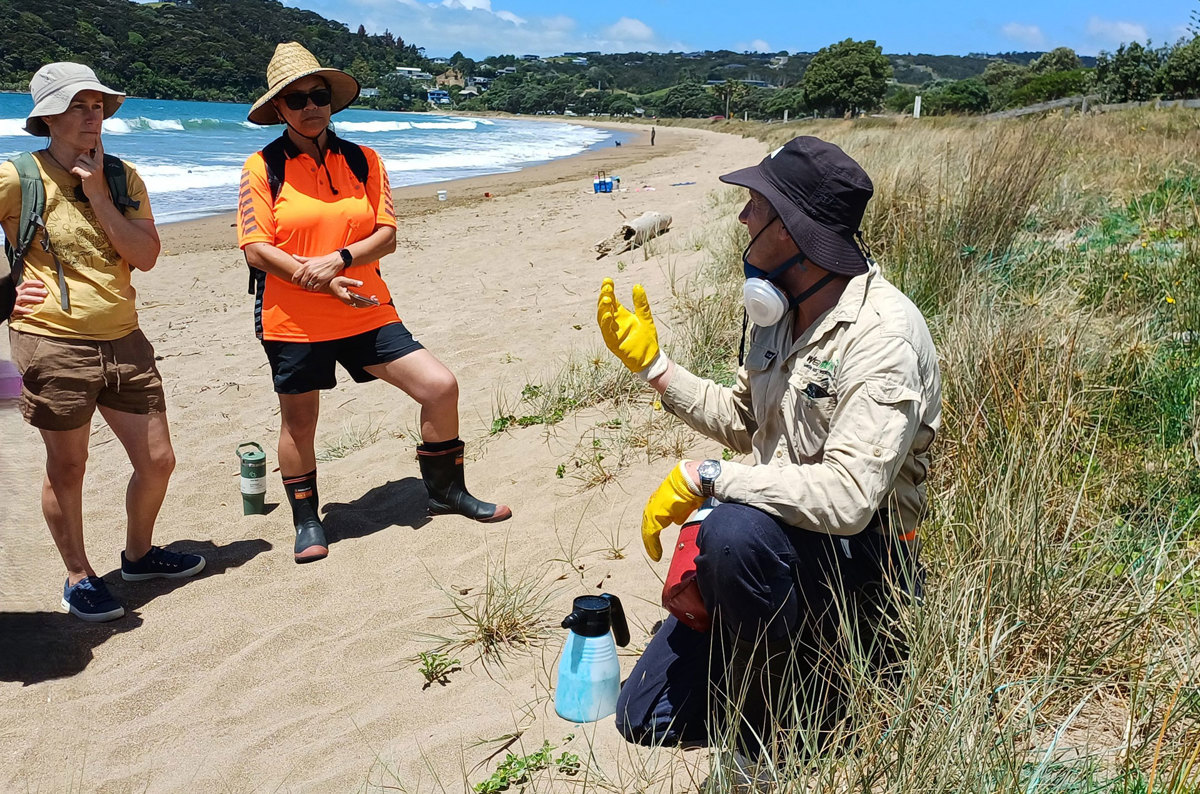
Mike Urlich demonstrates dune weed control to wānanga participants.
Along with managing animal pests and controlling access, weed control is a vital part of protecting and restoring our natural dune systems. This can range from controlling weedy invaders in natural dune systems to preparation and maintenance of restored and planted sites.
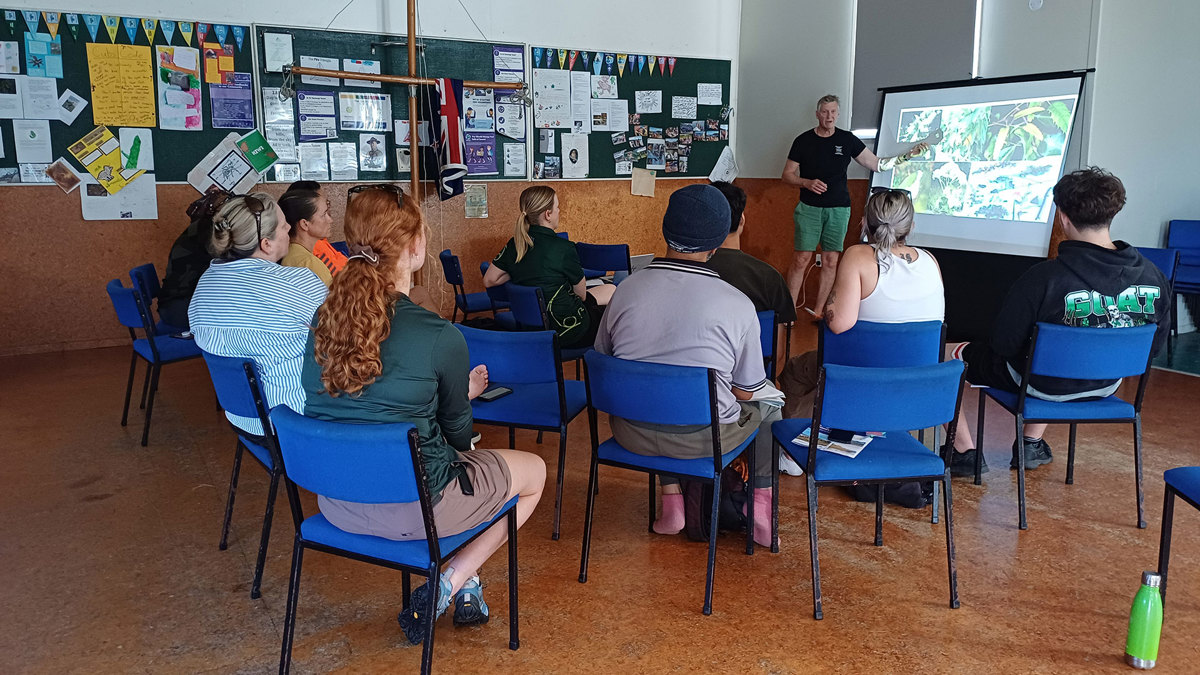
To delve into this subject further, a dune weed control wānanga was held at Taipa on 29 November, organised by the Northland Regional Council Coastcare team and facilitated by dune weed expert, Mike Urlich. Participants included kaitiaki from Parapara, Karapori (Taipa) and Haititaimarangai (Whatuwhiwhi) Marae, as well as local residents keen to upskill on dune weed control.
At the beginning of the wānanga, Mike put the wero (challenge) to participants to learn key dune plants – natives and pest species – and to pass this knowledge on to other kaimahi (workers) and the wider community to raise the profile and importance of dune weed control.
Foredunes are highly vulnerable to invasion by non-native species. Native plants, adapted to sandy conditions and reliant on some sand movement, play a crucial role in building dunes that buffer storm erosion. Sand dunes naturally shift through cycles of erosion and accretion, but species like exotic kikuyu grass over-stabilise foredunes, slowing the growth of native spinifex and pīngao and eventually replacing them. Because most weeds are less salt-tolerant and cannot rebuild dunes effectively, their spread weakens coastal protection.
Mike gave lots of examples of dune weed issues and management, and ran through strategies such as site prioritisation, control tools, methods, reporting, and monitoring. We then looked at some of the equipment and PPE before having a go at identifying some dune weeds and native plants from samples collected from Taipa in the morning.
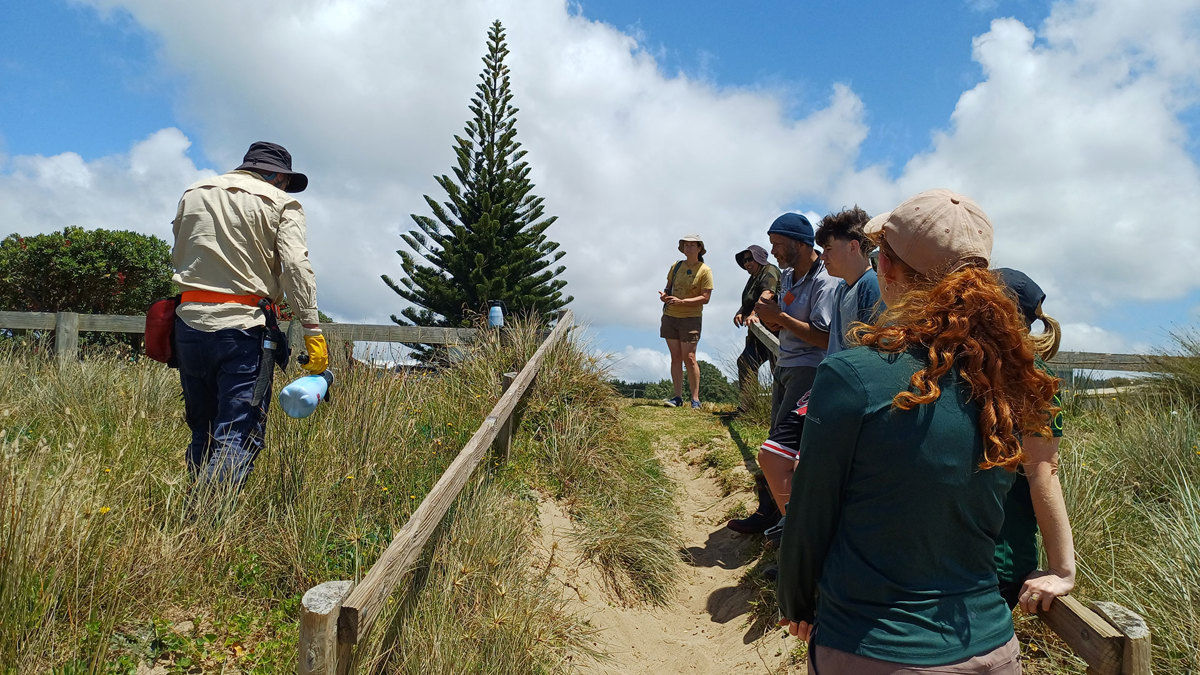
After lunch we headed out to the dunes for a weed control demonstration and had a walk along the beach to identify different weed issues and control options. There were some great discussions, including ways of minimising the need for herbicides, such as thorough site preparation before planting and establishing native mid-dune zones behind foredunes to buffer lawns, gardens, and reserves, reducing long-term maintenance.
All the participants had a great day and left inspired to get stuck into weed control and share their knowledge with others.