

Northland mudfish
There are five species of mudfish/hauhau/waikaka/kōwaro in New Zealand, all of which have a conservation status of either 'Threatened' or 'At Risk' under the New Zealand Threat Classification System.
The Northland mudfish (Neochanna heleios) is unique to Te Taitokerau. They are only found in rare, low-fertility wetland fragments within an 25km radius of Lake Ōmāpere, Kaikohe. The species was first observed in 2001. It is classified as “Threatened – Nationally Vulnerable” under NZ’s threat classification.
This cigar-shaped little fish is like a stocky eel, a species of galaxiid brownish-black in colour with distinctive reddish colouration around their gills and belly. They are also known as the burgundy mudfish.
The Northland mudfish have an extraordinary survival skill when their wetland home dries out; they can burrow into damp mud and breathe through their skin, until rain and moisture return. This takes its toll on the mudfish though and makes them more vulnerable, their ideal environment if no surface water is present is damp leaf litter and mud.
The main threats faced by the Northland mudfish are loss of wetland habitat through drainage and vegetation removal, drought, pollution and poor water quality and competition from invasive species.
Mudfish facts
- Only found in Te Taitokerau in rare, gumland wetlands within 25km of Lake Ōmāpere
- Grow to around 10 cm in length, with thick skin and no scales.
- Also known as the burgundy mudfish due to its reddish colouring
- Threatened – Nationally Vulnerable.
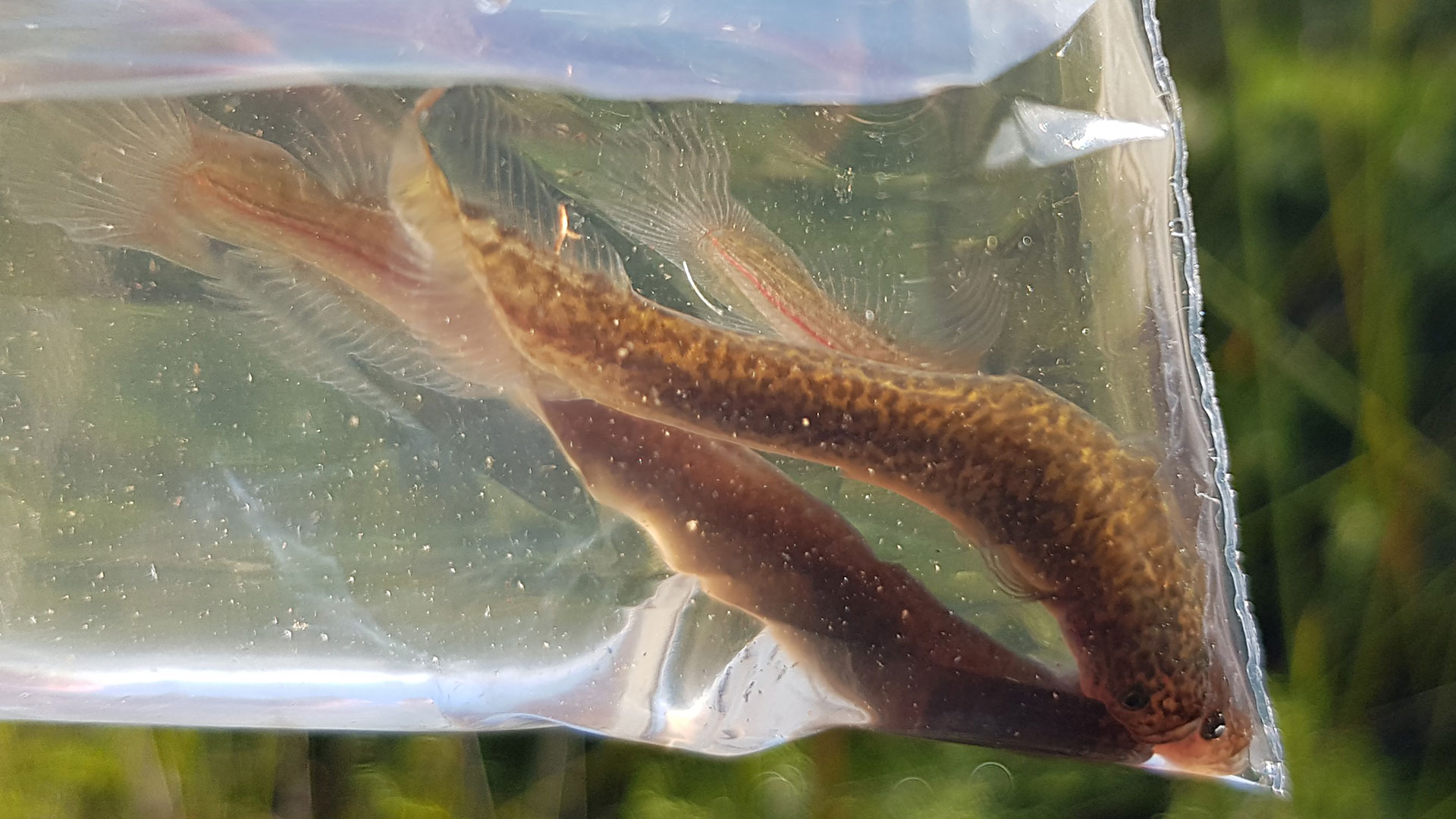
Northland mudfish from a survey using Gee Minnow traps.
How you can help
- Fence off wetland and waterways and exclude stock to improve water quality
- Plant native trees and plants around wetlands, streams and river margins
- Control weeds - contact NRC for pest plant control advice around waterways.
If you visit our lakes, rivers and wetlands, you can help to prevent the spread of freshwater pests by using the ‘Check Clean Dry’ method.
- CHECK equipment and remove any fragments of plants or weeds
- CLEAN all equipment that had been in contact with water
- DRY equipment thoroughly then wait for at least 48 hours before entering water again.