

Black mudfish
The black mudfish (Neochanna diversus) can be found north of the Waikato, overlapping the Northland mudfish, yet they have never been found together. It is classified as “At Risk – Declining” under NZ’s threat classification.
Preferring wetlands, peat ponds, swampy stream edges and seasonally dry drains they can be found in areas with overhanging vegetation, tree roots and little human disturbance.
Can survive in dry conditions by burrowing into moist mud or leaf litter—a process called aestivation where they can survive for weeks and months during dry periods.
Dark smoky grey to black, with paler speckling or blotching on back and sides, they are cigar shaped, like a stocky eel, with small eyes and large mouth.
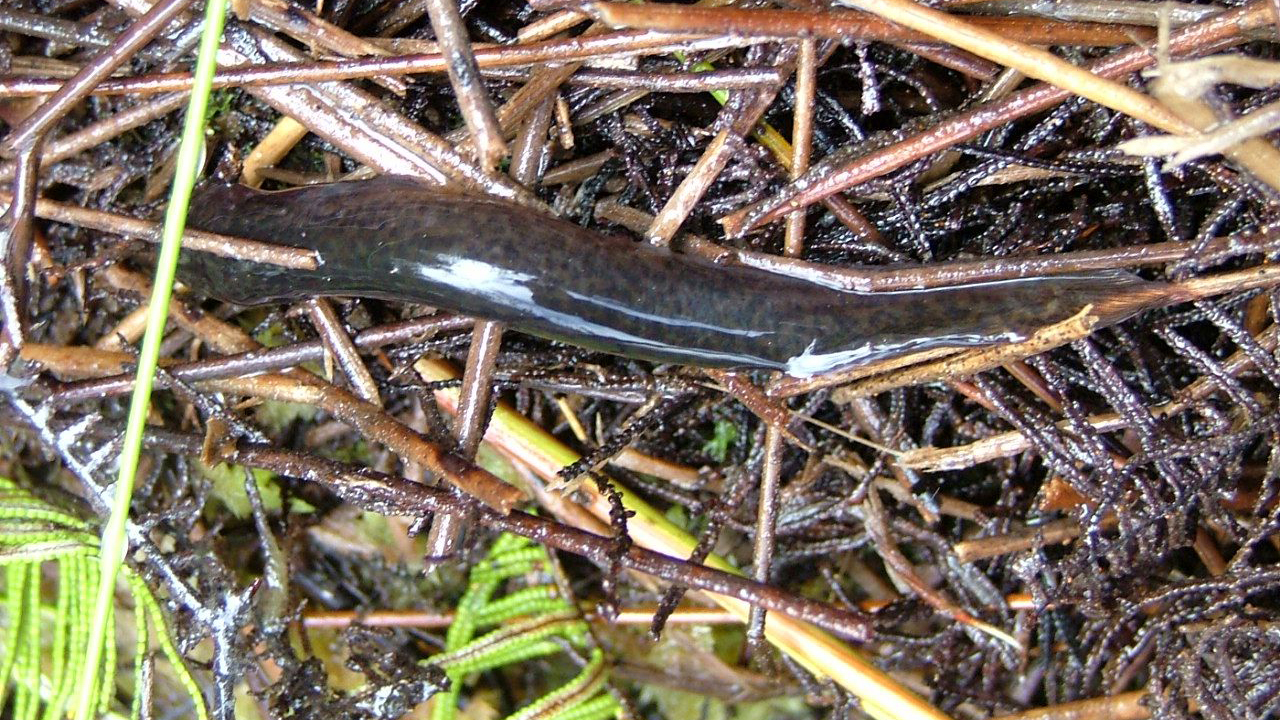
Nestled among wet vegetation, the black mudfish is known for its ability to survive in moist mud or leaf litter during dry periods.
Mudfish Facts
- Breathe through their skin, which is soft and scaleless and covered in a protective mucus layer
- Grow to around 10 to 15 cm in length
- Non-migratory and spawn in Autumn
- At Risk – Declining.
How you can help
- Fence off wetland and waterways and exclude stock to improve water quality
- Plant native trees and plants around wetlands, streams and river margins
- Control weeds - contact NRC for pest plant control advice around waterways.
If you visit our lakes, rivers and wetlands, you can help to prevent the spread of freshwater pests by using the ‘Check Clean Dry’ method.
- CHECK equipment and remove any fragments of plants or weeds
- CLEAN all equipment that had been in contact with water
- DRY equipment thoroughly then wait for at least 48 hours before entering water again.